
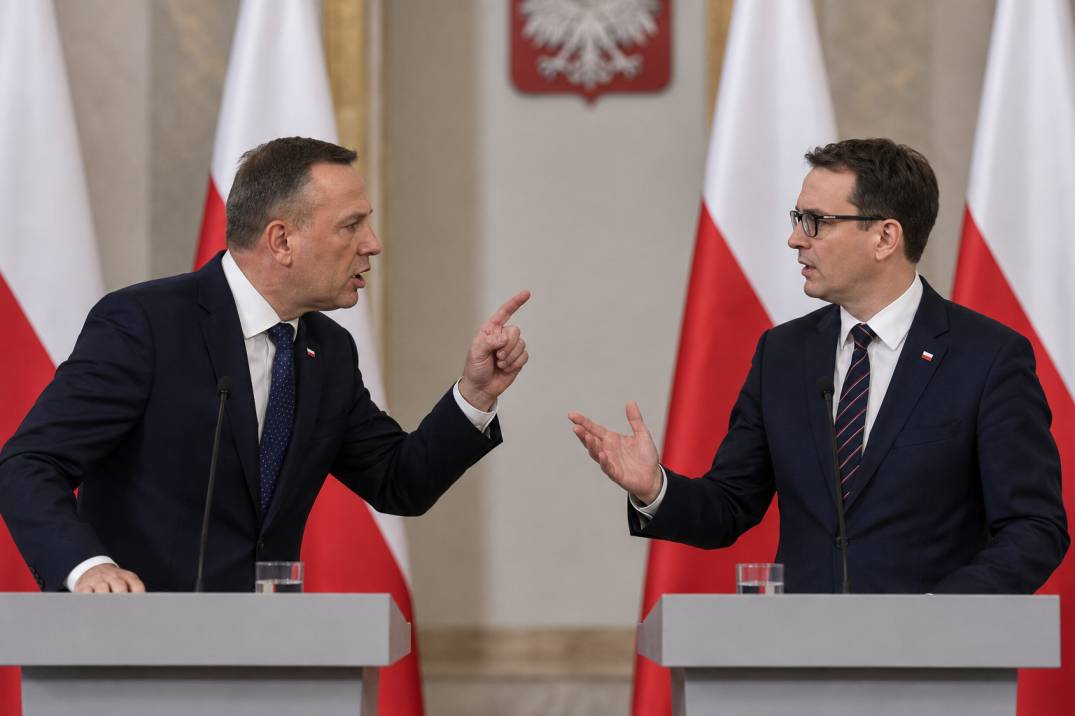
A political controversy has unfolded in Poland following remarks by Chargé d’Affaires Piotr Łukasiewicz during a ceremony commemorating the Volhynia Massacre in Ukraine. His acknowledgment of both the Polish victims of Ukrainian violence and the Ukrainian victims of actions by the Polish state has sparked criticism from some public sectors and political leaders. This has intensified an ongoing debate over historical interpretations between the two nations.
Foreign Minister Radosław Sikorski has stepped in to defend Łukasiewicz, emphasizing the importance of the diplomat’s comments in recognizing the shared suffering of both communities. Deputy Minister Andrzej Szeptycki also supported Łukasiewicz while expressing criticism towards President Karol Nawrocki’s comments on historical relations with national minorities in the Second Polish Republic. Szeptycki has been vocal about the need for a more nuanced understanding of past policies towards minorities.
Szeptycki pointed to historical incidents such as the Pacification of Eastern Galicia and the discrimination against minority communities as examples of policies that should not be idealized or considered “normal.” This perspective, however, has not been universally accepted, drawing condemnation from opposition lawmakers. They accuse him of minimizing the historical violence committed against Poles, highlighting the sensitivity of this historical chapter.
The discourse has underscored the persistent tensions within Poland regarding the interpretation of historical events, particularly the legacy of the Volhynia Massacre and the broader context of Polish-Ukrainian relations. The debate has opened up discussions on how nations remember and reconcile with complex and painful histories, emphasizing the need for diplomatic sensitivity and understanding.