
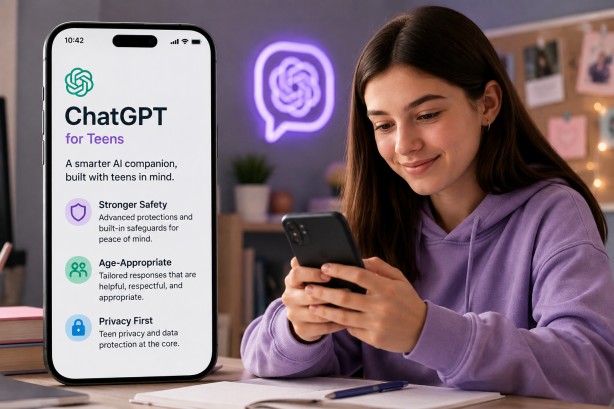
OpenAI has introduced a tailored version of its ChatGPT platform specifically for teenagers aged 13 to 17, incorporating enhanced safety measures and age-appropriate protections. This initiative aims to create a secure environment for younger users engaging with AI for various purposes including academic work, everyday inquiries, and companionship. The new version is designed to restrict content related to self-harm, suicide, and sexual or romantic topics, ensuring a safer experience for its teenage audience.
Parents have the option to link their accounts to set specific quiet hours, during which their teenagers will not have access to ChatGPT. This feature supports healthier AI usage patterns. In situations assessed as high-risk, parents may also receive safety alerts, reinforcing the platform’s commitment to safeguarding young users. Additionally, OpenAI is implementing measures to manage sensitive subjects like eating disorders by providing limited information on these topics and directing users to offline support resources when necessary.
To prevent the development of unhealthy emotional dependencies on the chatbot, the teen version of ChatGPT is carefully designed to avoid suggesting that the AI possesses personal feelings, consciousness, or emotions toward users. This approach underscores OpenAI’s effort to maintain a clear boundary between human and artificial interactions. The platform utilizes age-assurance technology to assess whether a user is under 18, factoring in various interaction patterns, and allocates minors to the teen version that includes these added protections.
In the educational domain, ChatGPT for Teens is crafted to encourage critical thinking and problem-solving among students, rather than simply providing direct answers or completing tasks for them. This strategy aims to position AI as a supplementary study aid rather than a substitute for genuine learning, fostering a more interactive and productive educational experience.