
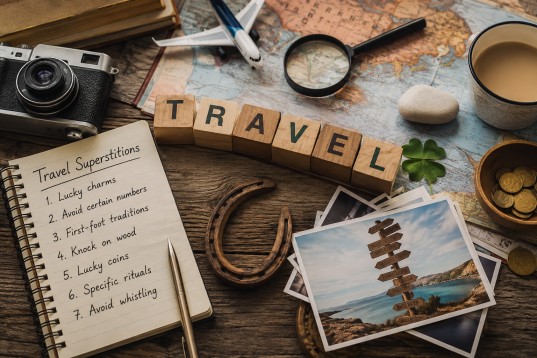
Across cultures, travel customs and superstitions have been cherished and passed down through generations, offering travelers a sense of comfort and security. These rituals, although rooted in folklore, remain vibrant among modern-day voyagers as they seek protection and good fortune on their journeys. A notable tradition in the Balkans involves carrying a clove of garlic in one’s luggage, believed to ward off bad luck and negativity during travel.
Air travel also has its share of rituals aimed at ensuring safe passage. A common practice among passengers is to lightly touch the exterior of the airplane before boarding. This gesture is seen as a symbol of trust and gratitude, and for some, it helps alleviate travel anxiety. Similarly, stepping onto the plane with the right foot first is a custom that many believe brings good fortune, as it is thought to set a positive tone for the trip ahead.
In various regions, families have their own ways of wishing travelers well. In Eastern Europe and the Middle East, it is customary to pour water behind a departing traveler, with the flowing water symbolizing a smooth and safe journey. Meanwhile, in several Slavic countries, there is a tradition of sitting on one’s packed luggage for a minute before leaving. This pause allows travelers to relax, remember any forgotten items, and mentally prepare for their trip.
Numerical superstitions also play a role in travel traditions around the world. Many travelers are cautious of certain numbers deemed unlucky in different cultures. For instance, the number 13 is often avoided in Western countries, while the number 4 is considered unlucky in parts of East Asia due to its phonetic similarity to the word for death. In Italy, the number 17 carries similar connotations. Consequently, some hotels, buildings, and airlines choose to omit these numbers from room or seat assignments.
These customs, though not scientifically validated, are an intriguing aspect of global travel culture. Whether seen as symbols of good luck or comforting rituals, they reflect a universal desire for reassurance and safety as people embark on their journeys. By honoring these time-honored traditions, travelers connect with a rich tapestry of cultural beliefs that have long guided those setting out on new adventures.