
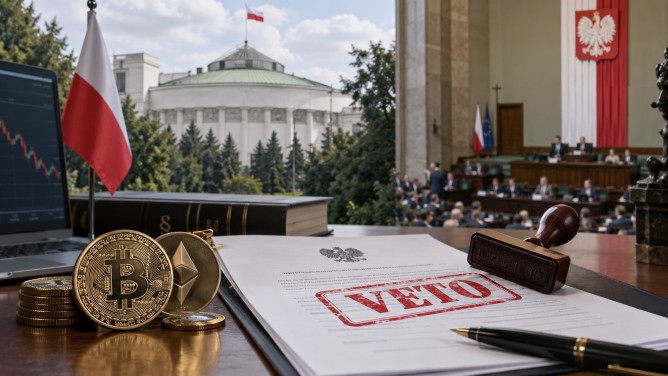
In a significant development within Poland’s legislative landscape, the Sejm has once again failed to overturn President Karol Nawrocki’s veto concerning a bill aimed at regulating the country’s crypto asset market. This marks the third unsuccessful attempt to move forward with the legislation, underscoring the ongoing challenges in establishing a regulatory framework for digital currencies. Friday’s vote saw participation from 442 members of parliament, with 241 voting to reject the presidential veto, 198 opposing the rejection, and three abstaining. The measure required a three-fifths majority to bypass the president’s decision, a threshold that was not met.
President Nawrocki has consistently opposed this particular crypto regulation bill, having previously vetoed it in December 2025 and again in February 2026. The president has cited concerns regarding the bill’s ability to effectively address issues raised by his office, insisting that significant amendments are necessary before he would consider endorsing the legislation. Nawrocki’s persistent vetoes highlight a broader debate on how best to regulate the burgeoning crypto market in Poland.
The president has expressed a willingness to sign the bill into law if the identified shortcomings are adequately addressed. This stance suggests a potential path forward for lawmakers who are keen on establishing a regulatory framework for crypto assets. However, as it stands, the legislation remains stalled, leaving Poland without a comprehensive regulatory approach to the crypto market. The impasse reflects broader global challenges as countries grapple with integrating cryptocurrencies into their legal and financial systems.
The recent vote underscores the divisions within the Polish parliament regarding the best approach to crypto regulation. While a majority supported overturning the veto, the lack of a supermajority illustrates the complexity and contentious nature of the issue. Lawmakers pushing for regulation may need to revisit the bill and incorporate changes that address the president’s concerns to secure the necessary support.
As discussions continue, the future of crypto regulation in Poland remains uncertain. The outcome of these legislative efforts could have significant implications for the country’s digital economy and its position within the broader European market. For now, stakeholders in Poland’s crypto sector must wait for a revised version of the bill that could potentially align with both legislative and executive expectations, paving the way for clearer regulatory guidance.