
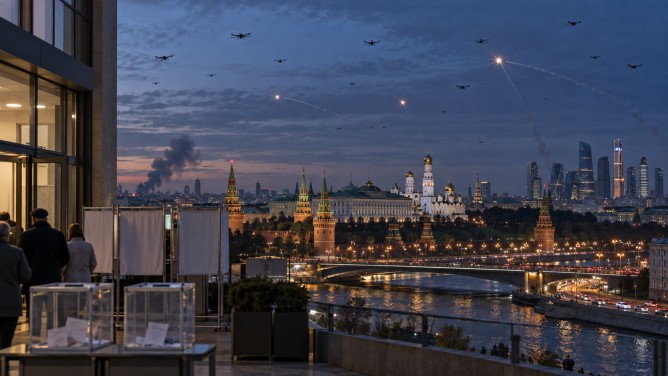
The recent drone assault on Moscow has left a palpable impact, with at least three casualties and significant damage to infrastructure, highlighting the escalating tensions in the region. More than 1,600 drones were intercepted over a few days, with around 450 targeting the Russian capital, according to Moscow Mayor Sergei Sobyanin. The attack, attributed to Ukraine, comes at a critical moment as Russia wrapped up its parliamentary elections, raising concerns about security and stability.
Residents in Moscow and surrounding areas faced immediate disruptions, particularly when a 21-storey apartment building in the Moscow region was damaged, prompting the evacuation of approximately 400 individuals. Emergency services were quickly mobilized to manage the situation and provide assistance to those affected. Additionally, the Moscow Oil Refinery sustained damage from several drones that managed to breach the city’s defenses.
Ukrainian President Volodymyr Zelenskyy acknowledged that the strikes were intentional, targeting crucial Russian energy and logistics infrastructure. This strategy forms part of Ukraine’s broader military tactic to leverage long-range drones and domestically produced weapons to hit deep targets within Russia, focusing on energy facilities that are vital to the country’s operations.
The timing of the attack coincided with the conclusion of Russia’s parliamentary elections, the first since its full-scale invasion of Ukraine in 2022. Russian officials have accused Ukraine of attempting to disrupt the electoral process through these aggressive measures. Meanwhile, Kyiv continues its campaign to weaken Russian military and energy strongholds as part of its ongoing resistance.