
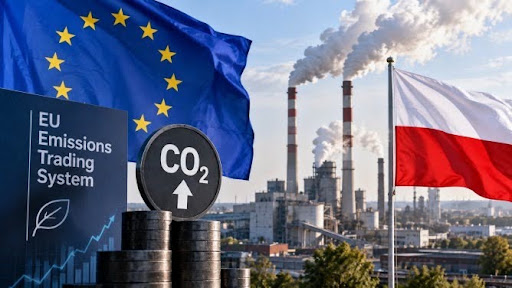
Poland’s industrial sector is grappling with rising costs attributed to the European Union’s Emissions Trading System (ETS), sparking concerns over the country’s competitive edge in the market. Energy-sector experts in Poland highlight that ETS-related expenses can constitute up to half of the electricity costs for certain industrial consumers, a stark contrast to the EU average, where these costs are estimated to be around 11%. This discrepancy underscores the financial burden faced by Polish industries as they navigate the transition toward more sustainable energy sources.
Polish authorities emphasize the unique challenges the country faces as it transitions from one of Europe’s largest coal-dependent energy systems. In response, they are advocating for adjustments to the ETS framework that would mitigate its financial impact while still enabling Poland to achieve its emission reduction targets. This call for change is part of a broader strategy to ensure that the nation can shift towards cleaner energy without compromising its industrial competitiveness.
Amid these challenges, Poland has been making significant strides in expanding its renewable energy capacity. The country’s commitment to diversifying its energy sources has led to substantial investments in renewable energy, energy storage, offshore wind, and nuclear power. Notably, in July, renewable energy sources accounted for 41.6% of Poland’s electricity mix, marking a historic moment as renewable generation surpassed coal-fired power for the first time.
In addition to advancing renewable energy, Poland has taken steps to reduce its reliance on Russian gas by diversifying its energy supply. This diversification strategy includes increased imports of liquefied natural gas (LNG) and the utilization of the Baltic Pipe. These efforts are part of Poland’s broader energy strategy aimed at enhancing energy security and independence.
Polish officials maintain that the country is committed to its energy transition and does not intend to decelerate its efforts. However, they are calling for increased flexibility and adequate time to shield their industries and economic competitiveness from potential adverse impacts. To support this transition, continued investments in new power-generation capacities, electricity grids, storage solutions, and system flexibility are deemed essential by the authorities, ensuring a balanced approach to achieving sustainability and economic resilience.